Transform your musical ideas into broadcast-ready Suno AI prompts
with professional quality standards. Zero banned AI language. Maximum creative precision.
🔥 Album Forge🧬 Lyric Alchemy🎵 Music Prompt🖼 Image Analysis🎭 Morph Your Song
Anti-AI Quality FilterActive · 60+ rules
Obiriec Quality StandardEnforced
Powered by
Claude SonnetAnthropic APIFlask · PythonServer-Sent EventsReportLab PDFSuno AI v4+
8 Production Modules
Every tool a serious music producer needs
From single-track prompts to full albums, from lyric transformation to image-driven composition — all enforcing broadcast-grade quality standards. ⚡ AMPA generates AI music via Suno & Mureka — not performed with real instruments. Professional producers can export AI stems and layer real instruments or vocals in any DAW (Logic Pro, Ableton, Pro Tools…).
01 / 06
🎵
Music Prompt
Generate a complete 9-section Suno prompt from scratch. Define genre, mood, territory, weirdness and style influence. Full Obiriec quality pipeline applied automatically.
Style PromptLyricsCover ArtSurprise Me!
02 / 06
🖼
Image Analysis
Upload any image — photo, artwork, cover — and generate a full music prompt inspired by its visual DNA. Literal or creative interpretation, controlled by slider.
Drag & DropBase64 SecureInterpretation Scale
03 / 06
🎭
Morph Your Song
Paste existing lyrics and transform them into a completely different genre, vocal character, texture and mood. Keeps the emotional core, rebuilds everything else.
60 GenresVocal ProfilesEnergy Directive
04 / 06
🔥
Album Forge
Build a complete multi-track album with unified sonic identity. Style Explorer pulls production DNA from any reference artist. Lazy loading, per-track regeneration, cohesion control.
The most sophisticated lyric creation workflow available for Suno. Builds from Creative DNA (narrative seed, conflict, driving force) through 8 structured steps to a complete production-ready prompt. Every creative decision feeds the next. Persistent cache — go back and change any step without losing unaffected work.
Generate real audio tracks directly inside AMPA — powered by Mureka AI. Bring your own Mureka API key, add AMPA audio credits, and download broadcast-ready MP3s. Full BYOK: you control the cost.
CREDIT PACKAGES — WALLET NEVER EXPIRES
5 CREDITS
€4.99
€0.99 / track
15 CREDITS
€12.99
€0.87 / track
40 CREDITS
€29.99
€0.75 / track
Mureka AI EngineStream & DownloadNo Suno NeededCredits Never Expire
Your album cover just learned to move. Drop any image — artwork, promo shot, concept art — and Reel Forge turns it into a cinematic motion clip powered by Runway Gen-4. Platform-ready in under 90 seconds.
POWERED BY RUNWAY GEN-4 · IMAGE TO VIDEO
GEN-4 TURBO
~30s
5 or 10 sec clip
6 FORMATS
9:16
Reels · Shorts · TikTok
Runway Gen-4No editing skillsPlatform-readyFull history
Browse 1479+ production-grade Suno prompt blueprints — curated by Obiriec and combinatorially generated across 23 genres and 20 moods. Filter, search, copy Style Prompt or Exclude Styles in one click. No account. No paywall. Pure inspiration.
AMPA doesn't just engineer prompts — it generates real music tracks via Mureka AI. Add your own Mureka API key, buy AMPA audio credits, and get broadcast-ready MP3s in minutes. Full BYOK: you own your API budget, AMPA provides the platform.
01
💳
Buy a credit pack — wallet never expires
→
02
🎛️
Enter style, mood, tempo and optional lyrics
→
03
🎵
Mureka AI generates your track — stream or download MP3
→
04
📜
Full generation history saved in your account
Starter Pack
5 credits
€4.99
€0.99 per track
BEST VALUE
Standard Pack
15 credits
€12.99
€0.87 per track
Pro Pack
40 credits
€29.99
€0.75 per track
✓ Credits never expire✓ Available on all paid plans✓ Stream & download MP3✓ No Suno account needed✓ Full generation history
Drop any frame — album cover, promo shot, concept art — and Reel Forge turns it into a cinematic motion clip powered by Runway Gen-4. Bring your own Runway API key (BYOK). No timeline. No keyframes. No export hell. Platform-ready in under 90 seconds.
01
🖼️
Upload your image — album art, promo photo, or any visual
→
02
🎛️
Choose model, duration (5 or 10s), format, and motion prompt
→
03
⚙️
Runway Gen-4 generates your clip — cinematic quality, no editing
→
04
🎬
Download and publish — Reels, Shorts, TikTok, promo assets
🎨
Album Cover Motion
Turn your static cover art into a living visual — smoke, light, atmosphere. The kind of pre-save visual that gets shared.
📸
Artist Promo Reels
One promo photo. Cinematic motion. A content piece that reads as professional video without a camera crew.
🎞️
Music Video Teasers
Drop a frame from your video or concept art — animate it, caption it, ship it as a teaser before release day.
📱
Social Content Engine
One image = one week of content. Animate different frames, swap ratios, batch your social presence in 15 minutes.
✓ Runway Gen-4 quality✓ 5 or 10 second clips✓ 6 aspect ratios✓ Full generation history✓ Pro & Studio plans
A public library of production-grade Suno blueprints — built by Obiriec, organized across 23 genres and 20 moods. Browse, filter by genre or mood, search by keyword. Copy Style Prompt or Exclude Styles directly into Suno. Zero registration. Zero paywall.
Cinematic Spy Noir Intro, Atmospheric Synth Pads, Cold War Tension, Slow Build-up, Volume Swells on Electric Guitar, Deep Fretless Bass…
📋 Copy Style
✗ Copy Exclude
CINEMATIC NOIR · TENSION
The Weight of Silence — Instrumental
Dark Orchestral, Minimalist Tension, Staccato Strings, Cold Reverb, Sparse Piano…
📋 Copy Style
✗ Copy Exclude
Workflow
From idea to deployment in minutes
Every output is Suno-ready. Correct field format, enforced character limits, zero AI clichés.
01
Define Your Creative Brief
Enter genre, mood, territory — or let Surprise Me! generate a complete random brief. The more specific your input, the more distinctive the output.
02
AI Builds Your Full Prompt
Claude Sonnet generates all 9 sections simultaneously: Style, Excludes, Lyrics, Production Notes, Cover Art, Inspirations, Checkpoints and more.
03
Quality Filter Applied
60+ banned terms replaced automatically. Character limits enforced. Suno-specific formatting checked. Anti-AI language instruction embedded in every prompt.
04
Copy & Deploy to Suno
Each section has its own COPY button. Paste Style → Exclude → Lyrics directly into Suno. Generate 2 variants. The second is usually stronger.
▶ SAMPLE OUTPUT — Mediterranean Blues
🎵 STYLE PROMPT
Mediterranean quasi-blues, acoustic guitar, Neapolitan dialect vocal, warm baritone, raw grain, minor pentatonic, slow rubato, hand percussion, emotional restraint, cinematic intimacy
[verse] Vient' ' terra, viento senza nome Adda passà p' sta via... [chorus] E nun ce sta rimedio...
1.2K / 4.5K chars
📋 COPY LYRICS
✓ Anti-AI filter · ✓ Char limits · ✓ Suno-ready
Obiriec Quality Standard
No AI slop. Ever.
Every generation passes through the strictest quality pipeline in any Suno tool. Built by a professional composer and music producer who knows what Suno actually needs.
🛡
60+ Banned Term Sanitizer
Automatic replacement of neon, tapestry, odyssey, gossamer, soundscape, mesmerizing, hauntingly and 55+ more AI clichés that break immersion.
📐
Enforced Character Limits
Style Prompt ≤1000, Exclude ≤350, Lyrics ≤4500 chars. Suno silently truncates — this tool doesn't let that happen.
🎭
8-Criteria Lyric Standard
Sensory specificity, conflict coherence, syntactic variation, breath management, show-don't-tell, sound play — every lyric generation enforces all eight.
🔁
Auto-Retry on Overload
API 529 overload? System retries automatically 3 times with delays of 3s, 8s, 15s. No interruption to your workflow.
⛔ Banned — never generated
neontapestryodysseygossamerlabyrinthsoundscapemesmerizinghauntinglytimelesstranscendentseamlessly blendmusical journeyheart and soulpulsatingtestamentetherealsonic landscape
✓ specific imagery✓ concrete sensory✓ production tags✓ genre-precise✓ emotional restraint✓ show don't tell
📖 INCLUDED — User Manual
Full step-by-step documentation for every section, integrated in-app and downloadable as a professional PDF manual (22KB, ReportLab-generated).
10 sectionsin-app modal⬇ PDF download
Simple Pricing
Start free. Unlock everything.
No hidden costs. Cancel anytime. Annual plan saves you 2 full months.
Monthly
Annual
SAVE 2 MONTHS
🎁 Early-Bird Waitlist
Get 15% off for 3 months
Join the waitlist now. No payment required, no card needed.
We'll notify you the moment we launch.
✓ Free to join✓ No card required✓ Cancel anytime after launch
These plans connect to your own API accounts — not ours.
Pro and Studio unlock unlimited AI generation by connecting directly to AI providers. You pay each provider at their standard rate — AMPA adds zero markup. Your AMPA subscription covers the platform and quality engine, not the AI calls.
🤖
ANTHROPIC
Prompt generation engine — all 7 production modules
Pro & Studio
🎵
MUREKA
Audio Studio — real MP3 generation from your prompts
Full AI access — all 7 modules. BYOK on all AI services: Anthropic key for prompt generation, Mureka key for Audio Studio, Runway key for Reel Forge. Pay each provider directly, no markup.
Credit system:
Credits reset every 30 days from your billing date — regardless of billing period.
Annual billing = 12 independent monthly credit cycles.
Starter: 300 library prompts / cycle · Pro: unlimited (BYOK) · Studio: unlimited (BYOK, 3 seats).
Annual plan saves money — never changes how many prompts you get per month.
Audio credits (Audio Studio) are a separate wallet — never expire, available on all paid plans. Requires your own Mureka API key (BYOK). Reel Forge requires your own Runway API key (BYOK).
Early Users
Built by a musician, for musicians
★★★★★
"Finally a tool that doesn't generate 'neon tapestries of mesmerizing soundscapes'. The output sounds like it was written by someone who actually listens to music."
M
Marco T.
Electronic Music Producer · Rome
★★★★★
"The Lyric Alchemy wizard changed how I approach songwriting. The 8-step structure forces creative discipline I didn't know I needed. Every session produces something genuinely usable."
S
Sara K.
Singer-Songwriter · Milan
★★★★★
"Album Forge with Style Explorer is a game-changer. I fed it a Miles Davis reference and got a 10-track album brief with coherent sonic DNA in under 3 minutes."
D
Diego R.
Jazz Composer · Barcelona
Made with AMPA · Real Results
From Prompt to Vinyl
Five albums. Forty-one tracks. One workflow built on AMPA — published on Spotify, Apple Music and 30+ platforms worldwide. The Diplomat went further: pressed on 12″ vinyl, available now on ElasticStage. All tracks are AI-generated via Suno. Professional producers can also layer AI-generated stems with live instruments and real vocals inside any DAW — Logic Pro, Ableton, and beyond.
◉ Vinyl Edition
◉ 12″ Vinyl▶ On Spotify10 Tracks42:512026
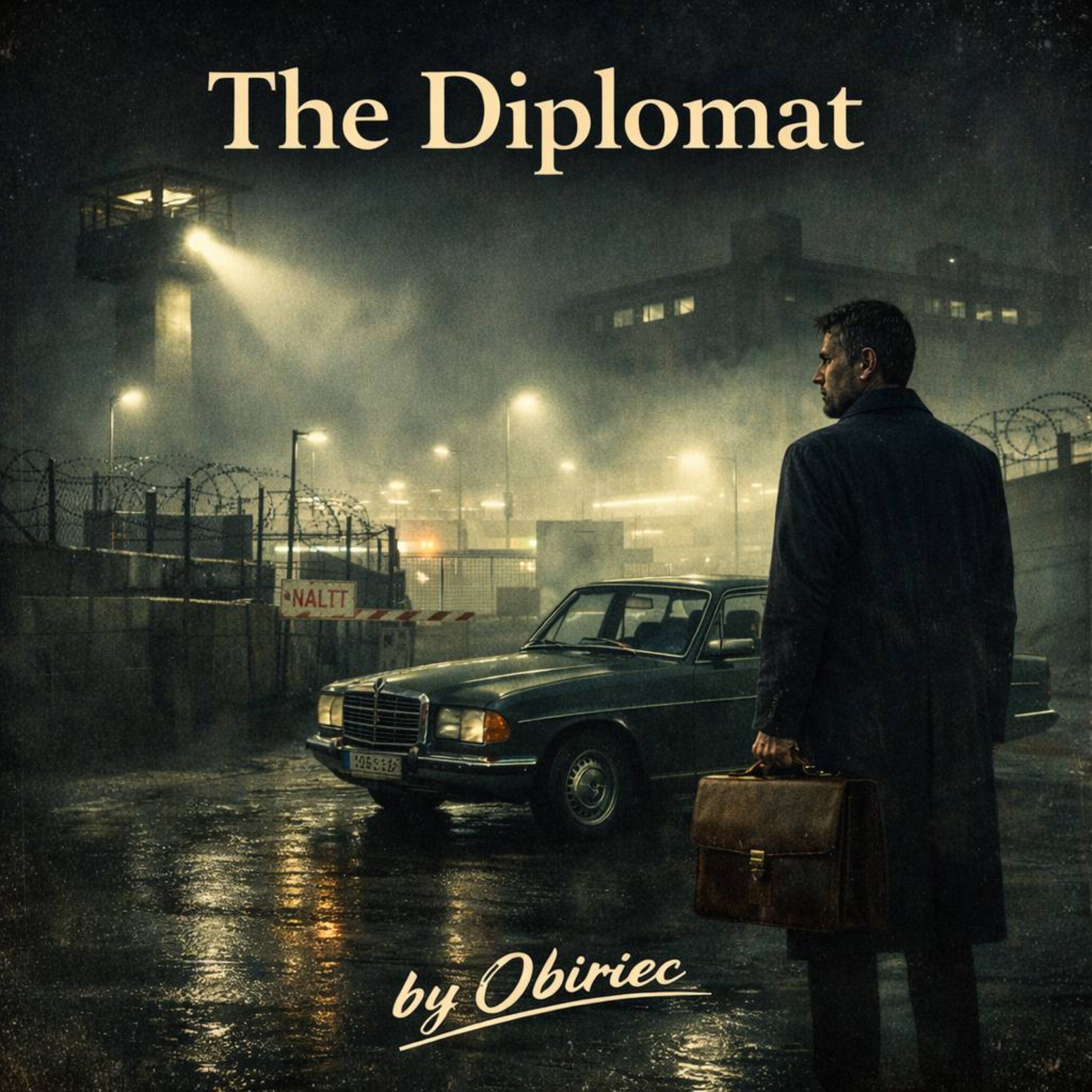
THE DIPLOMAT
Obiriec · Obiriec Records · 16 February 2026
A Cold War concept album. Ten tracks set in the shadows of divided Europe — Berlin checkpoints, Prague midnights, coded documents and departure gates. Built track by track with AMPA. Every note made it to vinyl.
Nine slow-burning tracks that map inner territories. Cinematic, atmospheric, post-rock adjacent — over five minutes per track on average. Fires that burn without announcing themselves.
Traditional tango structures collide with electronic production. From Buenos Aires to the digital arrabal — bandoneón meets bassline, milonga meets neon. Nine tight tracks, zero filler.
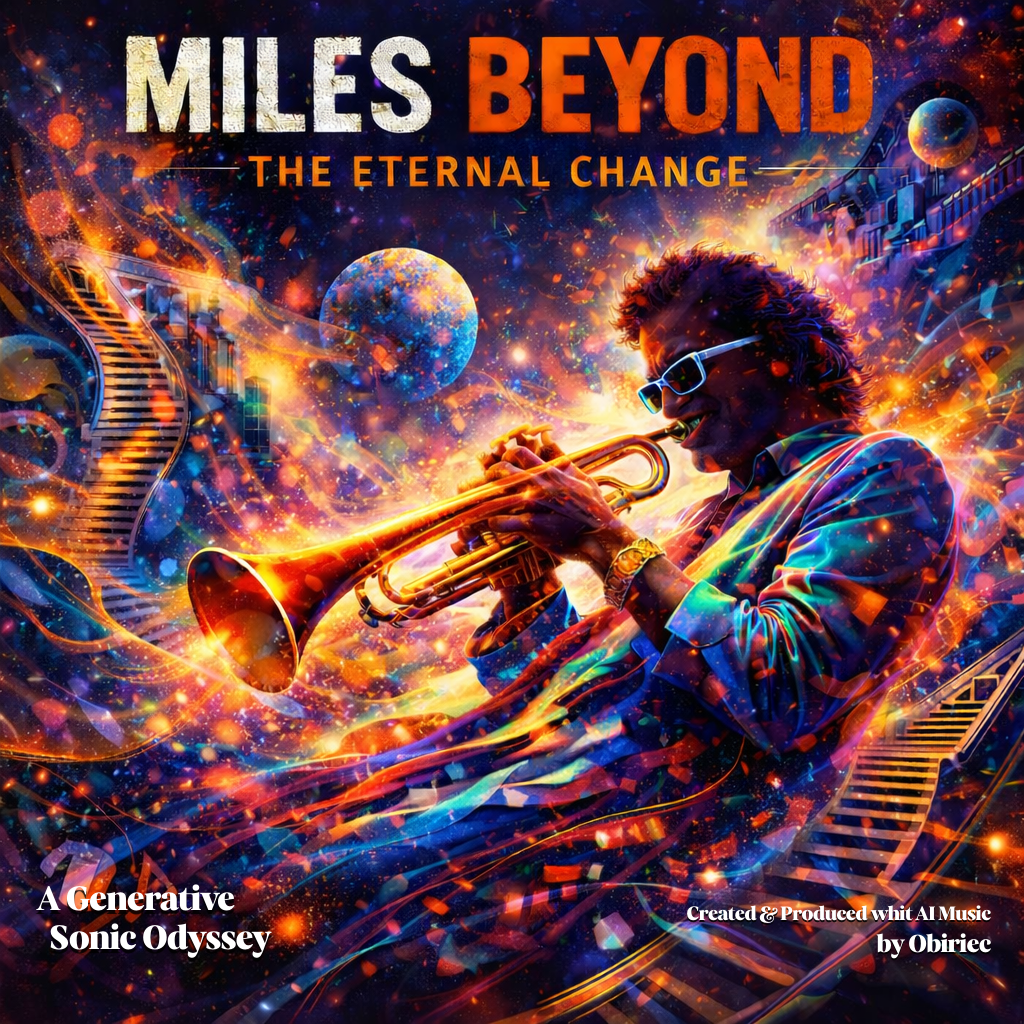
Ten tracks. Forty-two years of Miles Davis. From Birth of the Cool (1949) to Doo-Bop (1991) — each track maps a specific era. Musicology made composition, made possible by AMPA.
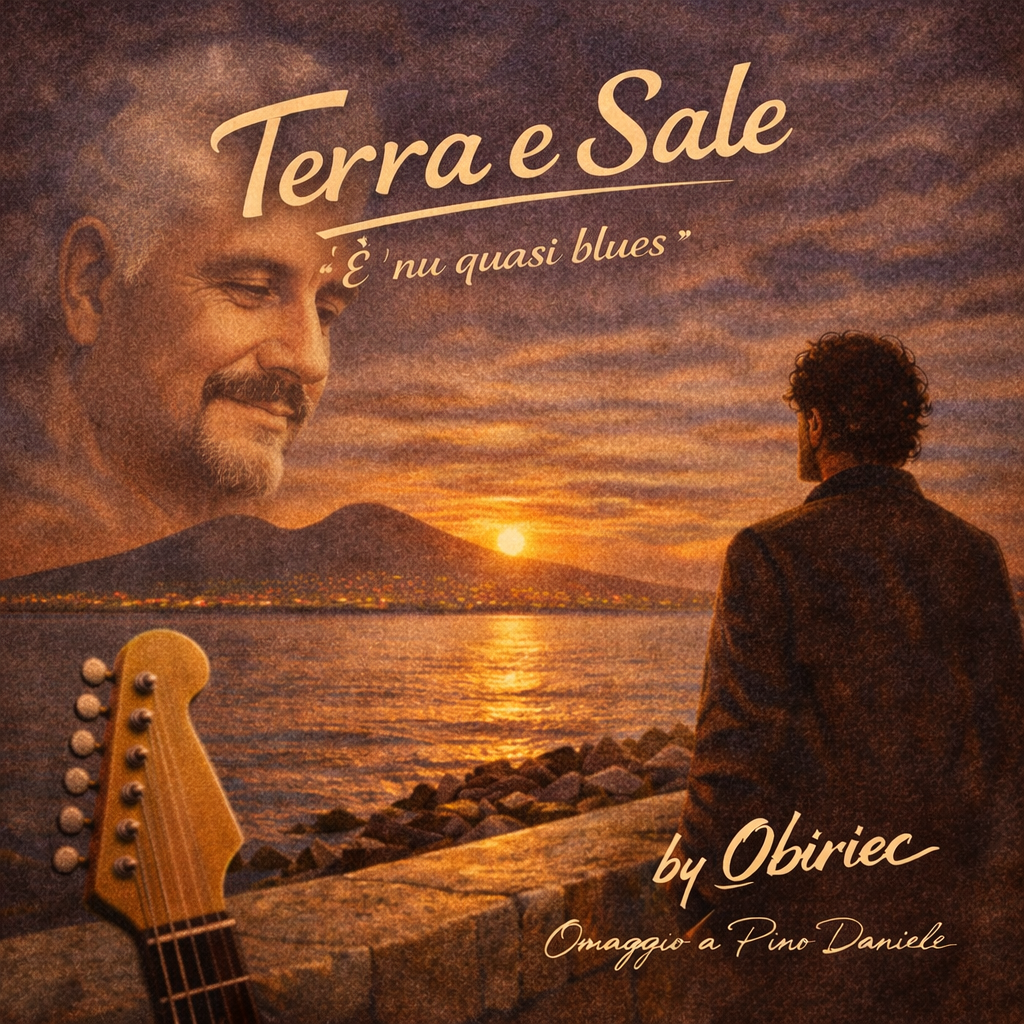
Written in Neapolitan dialect. Blues roots, Afro rhythms, Mediterranean identity. The longest and most personal album of the catalog — 54 minutes of territory, memory, and voice.
Ten tracks. One covert operation. The most complete demonstration of what AMPA can build.
The Diplomat is the album that settles the argument. Not because it announces itself — it doesn’t. It opens with halogen lights cutting through heavy grey mist and closes with a jet engine fading into runway wind 42 minutes later, and in between it maintains a unified production identity, a continuous narrative perspective, and a quality floor that never drops. Built track by track with AMPA and pressed on 12″ vinyl, it works simultaneously as a Cold War concept album and as the most rigorous proof-of-concept the system has produced. The test was simple: can AI-assisted composition build a record that belongs in a collection? The answer is on the pressing.
The architecture is deliberate. Side A is the operation — the border crossing, the paranoia, the social cover, the mechanical sprint. Across the Danube pivots between the two sides as a wordless instrumental, a river crossing that carries the record from action to consequence without a syllable. Side B is the reckoning: the opened safe, the life inside the system, the waiting room, the departure. The narrative never leaves the operative’s point of view. The production DNA never leaves the room it was designed in: Dark Cinematic Spy Noir, acoustic-electronic hybrid, fretless bass like a footstep on cobblestone, marimba like a coded signal, guitar volume swells like atmospheric breath.
THE TRACKS
Checkpoint Charlie. The album opens where it must: in a specific geography with a specific sound. A marimba enters in a staccato coded pattern — three notes, three more, a signal — before the grand piano drops low bass tones and a guitar builds a slow volume swell with a violin-like attack. The baritone voice arrives spoken rather than sung, very close to the microphone, with the weight of someone who has been at this crossing before. “The Vopo guard is smoking a cheap cigarette / Waiting for something that hasn’t happened yet.” Two spoken verses, a whispered chorus — “A heartbeat of silence in the no-man’s land / Just a stamp on a paper, and a wave of a hand” — a bridge with orchestral synth swells and dramatic tom-tom fills, a Gilmour-Knopfler guitar solo sustained over the synth pad, then the bare return: marimba, piano, the final spoken words barely registering. “We are through. Don’t look back.” The door closes.
Midnight in Prague. The paranoia track. Before the first note plays, footsteps cross a stone floor. Marimba and piano enter in metronomic lockstep — Tik, Tok — the sound of a mind counting seconds it finds threatening. A nylon string guitar erupts in sudden Spanish runs. The baritone is whispering now: Charles Bridge empty save for saints watching the river, “the click of a shutter, a match striking a flare / Someone is watching, but there’s nobody there.” The chorus croons low in a dark minor — “Trading the truth for beautiful lies / A city of ghosts in a coat of grey stone.” The album’s structural surprise arrives in the instrumental break: a solo classical guitar in fast Spanish scales, then a sudden orchestral full-stop and silence, then the verse resumes as if nothing happened. It did. The outro is Knopfler fingerpicking with dynamic spikes. The final image: footsteps fading into distance.
The Diplomat’s Waltz. Side A’s social cover in musical form. The time signature shifts to 3/4 and the entire texture of the record changes: Grand Piano counting ONE-two-three, nylon string guitar threading the waltz rhythm, accordion sustaining a dusty drone. Vocals are the softest on the album — deep baritone crooning in a ballroom empty for twenty winters, chandelier swinging in the draught, velvet faded, gold paint peeling. The chorus is the record’s most directly emotional moment: “One final dance for the love of a life / So take hold of my hand before everything halts.” An accordion solo arrives mid-track — wheezy, breathing, French-inflected — sounding exactly like a mechanism running down. Then the operation’s final rupture: “You whispered a name that I shouldn’t have heard / We traded a kingdom for one single word.” The border is signed and closed. The outro counts: one, two, three. The piano plays the final chord and stops.
Code Name: ICARUS. Side A’s kinetic peak. Drums enter alone at 120 BPM — a steady snare-driven train beat — then bass, palm-muted guitar (mechanical, precise, chika-chika-chika), and a low sustained organ chord layer over it in rapid succession. The baritone arrives at its fastest delivery on the record: “Black sedan on the Autobahn, rain against the glass / Watching the kilometers and the headlights pass.” Microfilm in the vest lining. Dashboard needle in the red. Checkpoint barrier down. “One mistake tonight, and I’m as good as dead.” The chorus is melodic and tense: “Just a pawn in the middle of a dangerous game / burning up the night.” Bridge drops to drums and bass alone, voice at a whisper: “Don’t look back. Just keep driving. They are right behind you.” The Knopfler-style guitar solo answers — fast fingerpicking, rhythmic, notes popping cleanly through the full band. “Keep driving... Icarus... Almost there...” The fader closes before the car stops.
Across the Danube(Instrumental). The album’s pivot and its only track without words. Five named movements trace a crossing in silence: the piano opens with flowing arpeggios — water moving, continuous, indifferent to what happens on its banks; the fretless bass enters warm and sliding; soft mallets on toms; the guitar makes volume-swell entrances, violin-like in attack, before a clean Stratocaster melody arrives low and lyrical on the neck pickup, playing with the space between notes rather than filling it. Orchestral strings build through the middle. The majestic solo carries the guitar to its highest register — Gilmour sustain, delay and reverb, a melody that does not resolve but does not need to. The piano plays a final major chord. Side A ends here, in the water, without ceremony.
Documents & Lies. Side B opens a safe. Yellow papers in a manila fold. Ink fading but signature still damp. The Fender Rhodes plays slow minor chords — warm, bell-like, slightly distorted, with the quality of an instrument that has sat in a cold room for years. Soft brushed drums, deep bass slide. A Gibson Les Paul neck pickup delivers the guitar’s first note as a slow blues bend with vibrato: the weeping tone the track will sustain throughout. The baritone is spoken-word, cynical, resigned: “The safe was easy, the combination was old.” The chorus names the betrayal without editorializing: “Documents and lies, stacked upon the desk / A monument to treason, grotesque.” A Fender Rhodes solo bridges the verses — jazzy, melancholic, unhurried. The bitterest line: “Did you think of me when you cashed in the cheque? / Or was I just another card in the deck?” Bridge strips to bass and Rhodes and a whisper: “Everything has a price. Even you. Especially you.” The guitar solo weeps in slow blues, warm tube overdrive, deep emotional bends. The appropriate sound for this particular material.
Rain on the Cobblestones. Rain and distant thunder precede the first note. A classical nylon string guitar enters in a Baroque fingerpicking style — intricate, polyphonic, a sound that belongs to a different century than the Cold War. Vibraphone adds bell-like resonance. Grand piano sustains low octaves beneath. The baritone is poetic here, spoken-sung: “The gargoyles watch us from the cathedral height / Stone eyes staring blindly into the night.” Gas lamps in a yellow haze. The chorus is gently melancholic: “Washing the history from these weary bones / A million footsteps that came before / Are washing away to the river shore.” A Baroque interlude sets nylon guitar and piano in counterpoint — sophisticated harmonic territory the album hasn’t entered before. A clean electric guitar enters on a volume swell, blending acoustic and electric registers. “The surface is perfect, but the foundation is cracked.” The bridge is the record’s most expansive structural passage outside Departure Gate: full drums, marimba in a faster pattern, vocal harmony low — “It falls on the sinner / It falls on the saint / It washes the canvas / It ruins the paint.” The Knopfler Stratocaster solo: long sustained notes turning into fast runs. Vibraphone chord. Silence.
Behind the Iron Curtain. The album’s perspective-reversal. Every track on Side A was the operative’s view from outside the system; this is the view from inside it. Steam hissing, metallic clanks, then drums arriving in a Motorik pattern — repetitive, machine-like, a beat that does not vary because the system does not vary. Synth bass pulses eighth notes at 105 BPM. A Telecaster bridge pickup plays a scratchy rhythmic figure, treble-heavy, as tonally distant from the warm Les Paul neck pickup of Documents & Lies as the record ever gets — a deliberate distance. The baritone is cold, almost robotic: “The sky is the colour of wet concrete / The rhythm of the hammer on the sheet metal beat.” The chorus chants monotonically: “Behind the Iron Curtain, the wheel turns round / Static on the wire, rust on the chain.” Second verse whispered and paranoid: “The telephone clicked when I picked up the receiver / The smell of lignite coal hanging in the air.” Bridge staccato: “System. Control. Silence. Patrol.” The Telecaster solo is angular, dissonant, industrial — fast chicken-picking runs, ice-pick tone, cutting through the mix without warmth. The outro powers down slowly while the Motorik beat continues unchanged. “The wheel turns... The wheel turns...” Mechanical noise. Silence.
The Safe House. The album’s most formally unusual track. No tempo marking — rubato, free time, the rhythm of a person sitting still waiting for a phone call that may not come. Dry and close: an upright piano with the hammer noise audible, a fretless bass warm and gentle, a clean jazz guitar voicing a single chord. The baritone is a whisper, very close to the microphone: “The curtains are drawn against the afternoon light / Making a premature, artificial night.” A passport with a name that isn’t yours. A rented apartment that will never be home. “The kettle is boiling, a high lonely sound.” The chorus is the record’s most fragile passage: “It’s safe in the shadows, it’s safe in the dark / Just me and the silence, and the dust on the floor.” No drums anywhere on this track. The instrumental break is a solo guitar in jazz ballad territory — Wes Montgomery chord-melody style, neck pickup, tone knob rolled off, warm and round. Bridge: “Is it safety? Or is it prison? The line is blurred.” The outro ends on a Major 7th chord, sustained, left to ring and decay on its own. Deliberately unresolved. The safe house doesn’t answer the question. It holds it.
Departure Gate. The album closes at its slowest tempo: 70 BPM, rain on the runway, grand piano playing melancholic chords over an atmospheric synth pad. Everything built across nine tracks — the crossed border, the traded kingdom, the damp signature, the industrial wheel, the safe house waiting — arrives at the gate and boards a plane. “Flight 804, the final call.” The baritone is soft and intimate: “I don’t look back, and I don’t look up.” The chorus is the record’s most open-sky moment: “Between the darkness and the dawn / Leaving the shadows, leaving the lies / Climbing forever into empty skies.” Drums enter in verse 2, soft snare with heavy reverb — the most restrained drum sound on any track that uses them. “I see the runway lights, a string of pearls. Goodbye to the underworld.” Orchestral strings swell in the bridge: “Wheels up. Gravity letting go. Nothing left here to know.” The Grand Finale unfolds in two movements: first the slow lyrical guitar — the “Brothers in Arms” outro approach, long sustained notes with delay; then the ascent, guitar climbing octaves, synth choir entering, the sound becoming majestic without becoming loud. A jet engine fades into wind. The final silence is earned.
HOW IT WAS BUILT — AMPA WORKFLOW
ALBUM FORGE · UNIFIED PRODUCTION DNA
Before the first track was conceived, Album Forge locked the album’s production identity: Dark Cinematic Spy Noir, acoustic-electronic hybrid, deep baritone spoken-sung vocals, Cold War aesthetic, Pink Floyd and Mark Knopfler influence, Ennio Morricone orchestral texture. This was not a mood board — it was a constraint system. The instrumentation map was fixed here: marimba as coded signal, fretless bass as footstep on cobblestone, guitar volume swells as atmospheric breath. The test for every subsequent decision: does this element belong in the same room as Checkpoint Charlie’s halogen lights and Documents & Lies’ damp signature? If not, it was removed.
STYLE EXPLORER · TEN DISTINCT ARCHITECTURES
Each of the ten tracks received its own Style Prompt built through Style Explorer’s reference-artist extraction process. The configurations do not repeat: Gilmour’s sustained emotionalism for the guitar-led passages (Checkpoint Charlie, Across the Danube, Departure Gate); Knopfler’s percussive fingerpicking for the kinetic tracks (Code Name: ICARUS, Midnight in Prague); Badalamenti’s jazz-ballad intimacy for The Safe House; Morricone’s orchestral architecture for the structural builds. Style Explorer’s function is not to replicate reference artists — it is to extract the structural principles underlying their sound and rebuild them inside a new context. Ten configurations. One album.
LYRIC ALCHEMY · TESTIMONY, NOT PASTICHE
The lyrics were built from a specific historical register: the sensory language of Cold War Berlin and Central Europe. The Vopo guard smoking a cheap cigarette. The specific smell of lignite coal. The click of a telephone when you pick up the receiver. The old combination on the safe. Runway lights as a string of pearls. Lyric Alchemy’s 8-step process worked on this raw material not to elevate it toward poetic abstraction but to compress it further into its most irreducible form. The test applied at each step: does this line feel like a memory or like a lyric? Everything was rebuilt until it felt like a memory.
COHESION CONTROL · SIDE A / SIDE B ARCHITECTURE
The album was sequenced as two distinct emotional phases with a wordless crossing between them. Side A builds from Checkpoint Charlie’s specific tension through The Diplomat’s Waltz’s social cover to Code Name: ICARUS’s mechanical sprint at 120 BPM. Across the Danube is the pivot: instrumental, wordless, the river between the operation and its reckoning. Side B lands the weight: Documents & Lies, the industrial cold of Behind the Iron Curtain, the unresolved Major 7th of The Safe House, the slow ascent of Departure Gate at 70 BPM. Cohesion Control validated this arc track by track: energy correctly sequenced, no premature resolution, no tonal inconsistency. The closing silence is earned, not assumed.
EXCLUDE STYLES · THE ANTI-HOLLYWOOD PRECISION FILTER
The single most decisive quality control decision on this album. Global exclusions applied to all ten tracks: Saxophone, Bond-Theme Pastiche, Generic Cinematic Swells, Hollywood Spy Clichés, Auto-Tune, EDM Builds, Background Scoring Texture. The goal: an album that sounds Cold War without sounding like a Cold War film score. That distinction requires precision. When cinematic tendency is removed, what remains is the specific: not “spy thriller atmosphere” but a room with drawn curtains, a kettle boiling, a passport with a name that isn’t yours. Each track had additional per-track exclusions beyond the global list. The result is a record that cannot be mistaken for a soundtrack, because it never aimed to accompany images. It aimed to replace them.
THE VINYL
The decision to press The Diplomat on 12″ vinyl was not a marketing gesture. It was a demonstration: AI-assisted composition, applied with structural intelligence and an absolute refusal to accept approximation, produces work that belongs in a collection. The album runs at 42:51 — tight enough for a standard two-sided 12″ at 33rpm without quality compromise. Every element in the pressing was earned through iteration, not generated and accepted. The vinyl exists because the album deserved it. Available on ElasticStage.
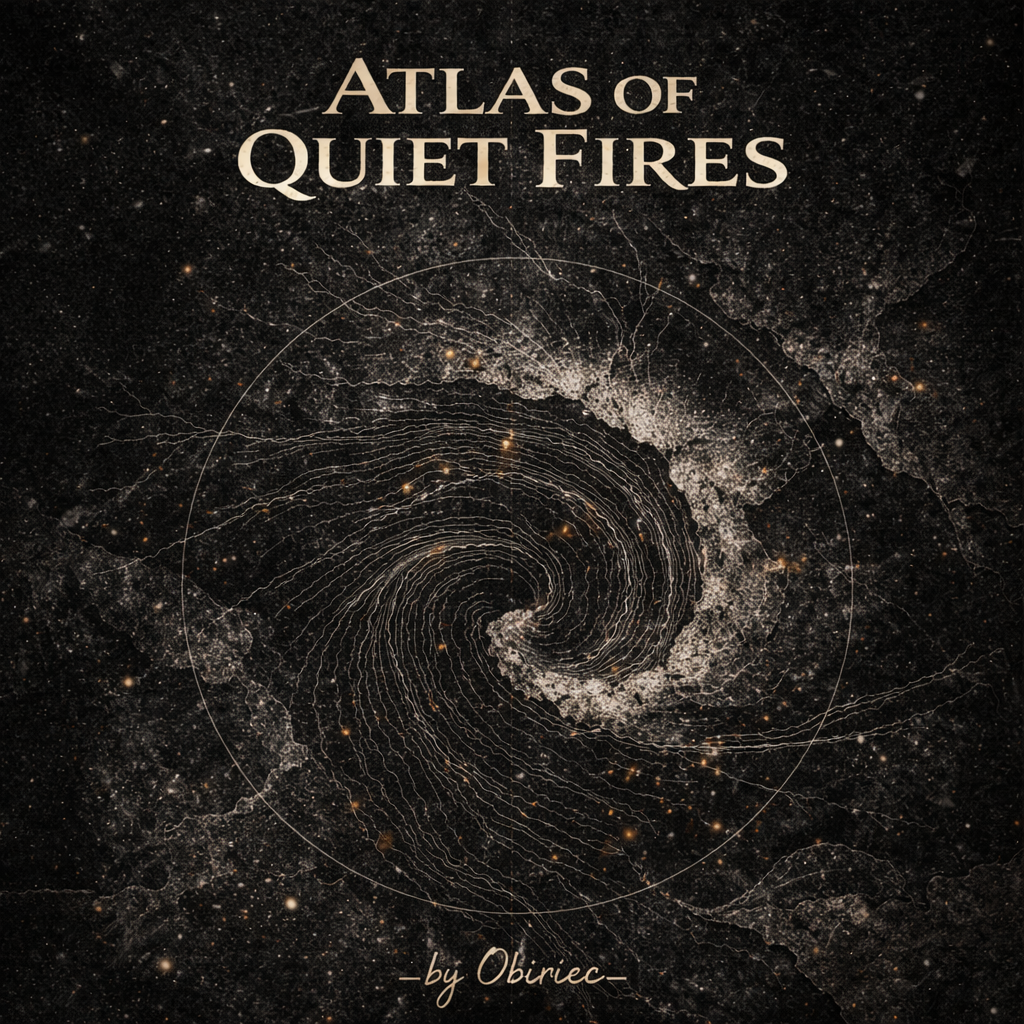
Nine tracks. One question, circled from nine different angles: what remains when you stop managing yourself?
Atlas of Quiet Fires maps interior geographies. It is a concept album about the experience of becoming aware of what you have been performing — and what that performance has cost you. Nine tracks, nine stages in the same arc: from the first uneasy recognition that something is wrong, through the burning down of false structures, to the rebuilt, quieter attention on the other side. The writing is precise and unsentimental. These lyrics do not comfort. They pressure. Fires do not end quickly — they reveal, slowly, what they are actually burning.
THE TRACKS
Null Choir. Opens the album with its central problem: the digital performance loop. “You feed the altar with attention / till every breath tastes thin.” The null choir of the title is what sits beneath the performance — a low-frequency presence climbing through the ribs, turning comfort to pressure. Not a threat: a truth. The album’s mission statement lives here: “I want the raw / the unedited nerve / not your practiced calm.” Everything that follows is an attempt to get there.
Vessel of Glass. The second track names the vulnerability that the performance was protecting: a vessel built of glass and will, designed to hold lightning without spilling. Every promise leaves a hairline crack. The signal that climbs through the ribs is not fear, not faith — it turns the key from the inside. The final image holds the album’s tonal register: “still holding fire, still learning how not to shatter.” Not shatterproof. Still learning.
Kinetic Psalm. The album’s most forward-moving track. A city built inside the chest, neon arteries, rusted steps. “Turn the pressure into motion / turn the bruises into breath.” The psalm of the title is not quiet — it is a vow made by a body refusing comfort. “I won’t fade into comfort / I’ll become the storm in it.” The closing line is the album’s most concentrated declaration: no choir, no crown, just momentum.
Axiom Furnace. The philosophical center. A furnace under the tongue where every sentence melts when it is young — the learned self-censorship of a person who was taught to speak in measured heat. The target is the axiom: the rules held as truth, the straight lines drawn through living souls. The silence identified here is not a void but a blade of light — a tool, when held correctly. “If I’m a shape in fire, let the fire remake.”
Through the Seams. The album’s most expansive track. The frame slips — and in slipping reveals something the rigid structure never could: “when we drift from the frame, that’s when we find our home.” Possessions, name, shape: borrowed bone, borrowed breath, a lantern in the wind. The track moves from challenge through dissolution to arrival. The final coda unfolds the same discovery in five forms — shed, cross, unfold, awaken, return — each one the same moment seen differently.
The Room Behind Ribs. Returns from the expansive to the intimate. The room where words do not work, where old alarms still run their circuits. Hunger hidden under “fine.” Not a monster, not a curse — a lesson rehearsed too many times. “Let me open, without excuses / let me feel it, without a shield.” The closing image is exact: quiet geometry, no formula, just breath finding shape. This is what survives the furnace.
Salt Hymn. The album’s quietest track, but not soft. Salt to stay awake: an antidote to the borrowed peace of shrinking small. “Sing it low, sing it honest — no crown, no cure.” The voice already present beneath the mask. The hymn is not a celebration of arrival — it is a practice of staying honest, note by note. “If I’m building something holy, let it be raw and pure.” The sacredness is in the unprocessed.
Black Atlas. The penultimate track draws the map that does not yet exist. “I’m drawing a black atlas / with a shaking hand / not to escape the shadow / to learn where I stand.” The names swallowed, the stones in water that refuse to float — they surface here. The insight: “I don’t need light to be awake / I need the truth I wouldn’t take.” The atlas is not a guide. It is a record of presence in darkness.
Veil of Echoes. Closes the album with its most precise image: not a ghost, just a mirror made of sound. The veil is not removed — it is lifted enough to see. “I’m not asking for a rescue / I’m asking to know.” The voice that arrives in tremors asked to grow, not to stop. The most patient track on a patient record. The architecture has changed. The quiet fires have been burning all along.
HOW IT WAS BUILT — AMPA WORKFLOW
ALBUM FORGE · INTERIOR ARCHITECTURE
The album required a unified emotional field, not a unified sonic palette. Album Forge defined the DNA: guitar-led orchestral arrangements, sparse electronics, maximum dynamic range, deliberate baritone delivery — never pop-processed — and lyrical content operating at high specificity. The brief was post-rock in structure, literary in density. Nine tracks sharing tonal gravity without sharing the same register. The hard constraint: no emotional comfort, no premature resolution. Fires do not resolve early.
LYRIC ALCHEMY · PRECISION AS PRACTICE
Every lyric was built through AMPA’s 8-step Lyric Alchemy process with a single governing constraint: no borrowed emotional language, no generic resolution. Each step flagged and replaced abstraction with image, feeling with sensation, vague distress with specific observed detail. “I feel afraid” becomes “I want the raw, the unedited nerve.” “I’m broken” becomes “the body keeps counting what I hide.” The result is a lyric style that functions closer to poetry than to song writing: compressed, exact, image-driven throughout.
STYLE EXPLORER · THE POST-ROCK SPECTRUM
Reference artists pulled across individual tracks: Explosions in the Sky, Godspeed You! Black Emperor, Portishead, Brian Eno, Sigur Rós, Mark Lanegan. Each track drew from a different node of the post-rock, ambient and art-rock spectrum. Style Explorer’s role was to prevent any single influence from collapsing the album’s range while maintaining consistent emotional gravity. The result: nine tracks that are sonically distinct and tonally unified — the same interior space, nine different corners of it.
COHESION CONTROL · THE ARC
Nine tracks, 48 minutes, one continuous psychological arc. Cohesion Control validated that each transition — Null Choir to Vessel of Glass, Axiom Furnace to Through the Seams, Salt Hymn to Black Atlas — felt like a movement within a single interior space, not a sequence of separate songs. The arc was designed to not resolve early: the album earns its final quietness only after staying inside the pressure for the full duration. The fire that burns throughout is quiet precisely because it does not hurry.
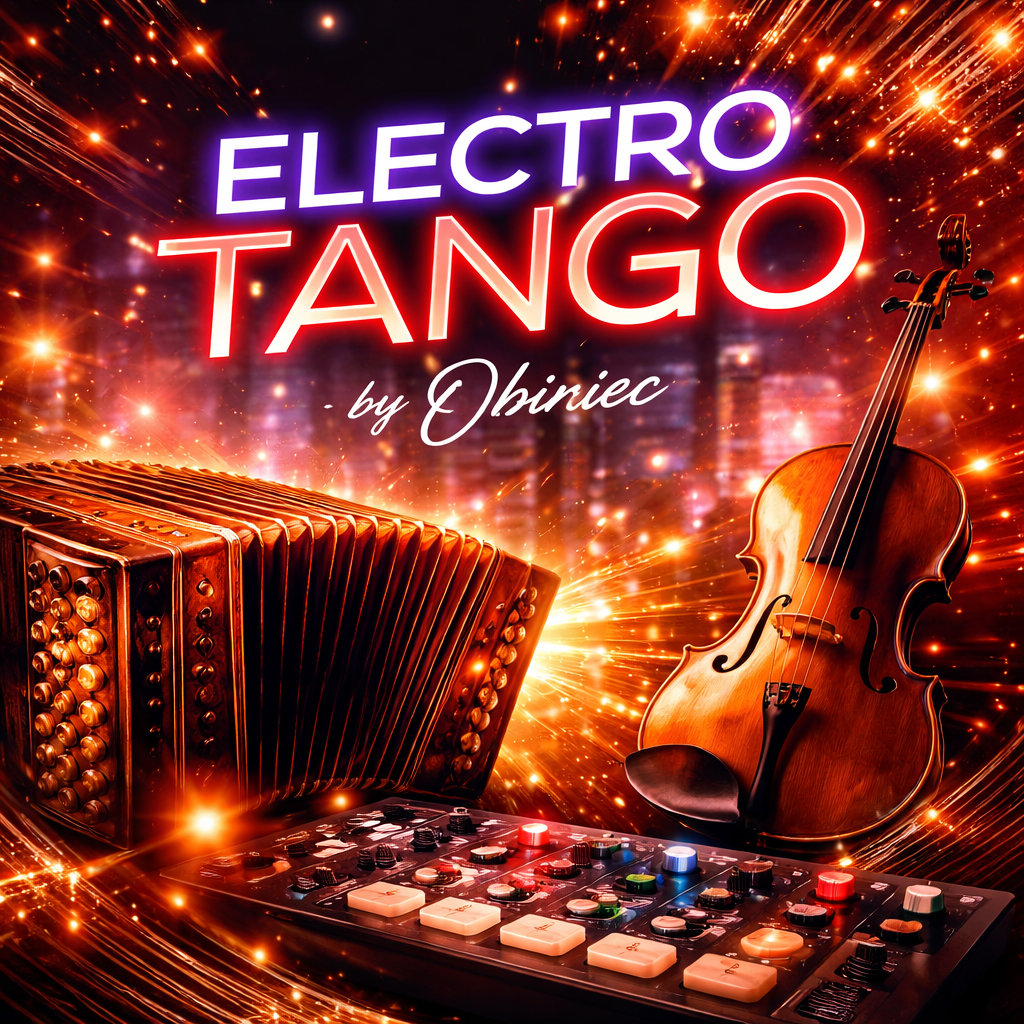
Nine tracks. Two traditions. One collision that neither Buenos Aires nor Berlin could have managed alone.
Electro Tango does not sample tango as a costume. It disassembles the tradition at the structural level — the bandoneón’s chromatic tension, the milonga’s rhythmic asymmetry, the dark minor cadences of the arrabal — and rebuilds each element inside a club production framework. The push-pull characteristic of tango’s rhythmic feel survives intact within 4-on-the-floor kick patterns and sidechain compression. The drama of the classical tango orchestra becomes the energy architecture of the drop. The breakdown replaces the bandoneón solo. Except sometimes it doesn’t — sometimes it is one.
The nine tracks span a spectrum. At one end: peak-time club arrangements running 6–8 minutes, with two massive drops and the full toolkit of electronic production at full power. At the other: tighter tracks where the acoustic-electronic tension is closer to the surface, the bandoneón and the synth bass in direct confrontation. Throughout: dark minor harmony, chromatic turns, strong cadences. No track drifts toward Latin radio crossover. The reference coordinates are Buenos Aires 1940 and Berlin 2024, held simultaneously.
THE TRACKS
Neon Milonga. The milonga — tango’s faster, more playful cousin — run through peak-time club production at 126 BPM. The bandoneón plays lead phrases and sharp stabs over a punchy drum machine kick; the tango push-pull survives inside the sidechain pump. Two massive drops anchor the long arrangement, with a bandoneón solo as the emotional center. Vocal material is purely percussive — micro-hits and chops, human voice as texture not melody. The album’s opening argument: Buenos Aires and the club floor are not opposites.
Suburbio en 4/4. The arrabales — the Buenos Aires outskirts where tango was born — translated into 4/4 electronic time. The bandoneón phrases are longer here, more melodic; lush string stabs answer them with orchestral weight. The synth bass breathes rather than hammers. The percussion is where the tension lives: syncopated against the grid, constantly displacing the beat, making the groove feel simultaneously modern and irreducibly old.
Bandoneón & Bassline. The title names the dialectic: acoustic instrument against electronic low-end, pulling in opposite directions. The bandoneón carries the melody and the emotion; the bassline holds the architecture. Drum machine percussion creates the floor between them. Electronic textures build through the dramatic breakdowns — filter sweeps, reverb tails, atmospheric depth — before the bassline reasserts and pulls everything back to the body.
Lámpara Roja. “Red Lamp.” Deep house beats — four-on-the-floor, relentless — against syncopated bandoneón phrases that refuse to align with the grid. The kinetic energy is sustained throughout. The dramatic strings arrive at the chorus and change the room’s scale: a dance track becomes a cinematic event. Sharp percussive accents mark the structural transitions. The title’s reference is not subtle — the Buenos Aires underworld where tango first existed, before it became a tourist attraction.
Callejón Digital. “Digital Alley.” Narrower than Lámpara Roja, more claustrophobic. The deep house pulse is darker; the pulsing synth layers are textural rather than melodic. The bandoneón phrases syncopate in a way that creates rhythmic unease — resolutions that don’t arrive where expected. The strings in the chorus cut through the dense texture like a line through fog. The groove never relaxes. The alley never widens.
Ritmo de Ayer. “Rhythm of Yesterday.” The album’s most explicit confrontation between tradition and modernity. Staccato strings directly reference the Golden Age tango orchestras of the 1940s: their articulation is deliberately un-processed, their attack unmistakably acoustic. Syncopated piano riffs carry the same historical weight. Then the chorus: a bass-driven drop with soaring synth leads breaks entirely from the acoustic register. The break is the argument. Two eras, one structure, the tension between them is the music.
Puñal de Luz. “Dagger of Light.” The album’s most aggressive track. Maximum punch in the electro beat; the staccato strings are weapons not decoration. The verses carry the darkest electronic textures on the record. Then the chorus: the synth lead soars to the high register and stays there, fortissimo. The tango drama is at full intensity — the dagger, the moment of maximum emotional confrontation. No retreat.
Corazón Sampleado. “Sampled Heart.” Companion piece to Neon Milonga: same 126 BPM, same full club architecture, same long arrangement. But where Neon Milonga opens the night, this track takes it deeper. The sampler is the emotional center here — tango chops, micro vocal hits, street textures assembled into a narrative. The word in the title carries the album’s central metaphor: tango itself is a genre built on memory and appropriation. This track makes the process audible. The bandoneón solo is the human anchor. Everything else is constructed. That moment is played.
Códigos del Arrabal. “Codes of the Arrabal.” The album’s most complete structural statement. At 124 BPM — two degrees slower — it carries a different gravitational weight. The opening is the record’s most cinematic: vinyl and tape crackle, distant city ambience, the bandoneón breathing through swells and tense minor chords before a filtered kick quietly approaches. A track that unfolds rather than attacks. Space is given to every instrument: a full bandoneón solo, a strings-and-piano breakdown, a violin-and-piano feature. The outro dissolves everything — hats gone, clap gone, kick filtered to silence — ending on a bandoneón breath and a final piano chord dissolving into vinyl noise. Where the album began is where it ends: the street, before the music started.
HOW IT WAS BUILT — AMPA WORKFLOW
ALBUM FORGE · A GRAMMAR OF COLLISION
The album required a precise definition of what electro tango means and — critically — what it doesn’t. Album Forge locked the DNA brief before any track began: tango tradition (Piazzolla’s harmonic language, the golden-age orchestras’ rhythmic vocabulary, the arrabal’s emotional register) fused with club production aesthetics (sidechain compression, sub bass architecture, long-form arrangement). The negative constraint was equally important: no Latin-radio crossover, no generic world-music fusion. Nine tracks were built against this anchor. None drifted.
STYLE EXPLORER · TWO TRADITIONS ONE GRAMMAR
Style Explorer extracted the structural DNA of both traditions simultaneously. From tango: dark minor harmony, chromatic cadences, the push-pull rhythmic displacement, the bandoneón’s microtonal expressiveness, the staccato string attack of the Golden Age orchestras. From electronic production: 4-on-the-floor pulse, filter automation, sidechain design, wide stereo architecture, sampler as compositional tool. The critical finding: both traditions share the same emotional grammar. The drop is a cadence. The breakdown is a bandoneón solo. The build is a chromatic modulation. Different instruments. Same logic.
SOUND DESIGN · THE SAMPLER AS MEMORY
Nine tracks, nine distinct uses of the sampler as a compositional voice. In Neon Milonga: tango chops as percussive texture, rhythm not melody. In Corazón Sampleado: the sampler becomes the track’s emotional center, assembling a human presence from fragments. In Códigos del Arrabal: vinyl and tape artifacts serve as the album’s historical anchor — a sonic marker of origin before the electronic transformation begins. The consistent decision: the sampler in this album never replays. It reconstructs. Memory as synthesis.
COHESION CONTROL · NINE POINTS ONE MAP
Nine tracks sharing a common premise but differentiated in character required careful validation of the spectrum’s coherence. Cohesion Control confirmed the through-lines: bandoneón presence in every track, dark minor harmony and chromatic cadences consistent across all nine configurations, the push-pull rhythmic tension as a structural constant. The result is nine distinct sonic positions — from the compact kinetic energy of the shorter tracks to the full 6–8 minute club arrangements — that all occupy the same map. Different points. Same territory.
Forty-two years. Ten tracks. One intelligence — evolving.
Miles Davis did not have one career. He had several, each dismantling what he had just built. Birth of the Cool to Bitches Brew to Doo-Bop: the same musician, unrecognizable in each decade. Miles Beyond is a musicological argument in the form of an album — ten tracks each locked into a specific Davis era, sequenced chronologically, making 42 years of sonic evolution audible in 35 minutes. The constraint was absolute: each track drew only from its own era’s DNA. No anachronistic borrowing. The Bitches Voodoo track sounds nothing like Blue in Green Mist — as it should not.
THE TRACKS — A CHRONOLOGICAL JOURNEY
Birth of the Silence (1949 — Birth of the Cool). Sixteen bars of soft piano and walking bass before anything else enters. The baritone saxophone solo — mellow, woody, building tension in a long diminuendo — is the giveaway: this is arranged music, not jam. The French horn and tuba counterpoint in the bridge establishes polyphonic logic. Miles-style open trumpet, lyrical, exploring modal space. The finale is pianissimo, patient to the point of disappearance. Jazz without heat. The invention of cool as a compositional stance.
Blue in Green Mist (1959 — Modal Jazz). Thirty-two bars of dreamy piano chords before the harmon-muted trumpet enters — haunting, minimalist, each note chosen for what it withholds. The double bass pedal point on D anchors everything. The trumpet explores blue notes dragging the tempo into stillness. The piano in impressionist voicings, the left hand sparse, the right hand delicate. The coda: total silence with lingering reverb. Not a fade. A disappearance. The track that taught jazz that space is a musical material.
Sketches of Flame (1960 — Third Stream/Spanish). Dramatic brass fanfare, distant drums, castanets. The departure is immediate: flamenco-style trumpet runs, rapid triplets climbing to the high register in fortissimo. A pastoral interlude — flute and oboe, quiet and calm — provides the one breath before the 5/4 bridge returns with rhythmic complexity. The grand orchestral finale is dense and mournful. The castanets alone in the outro are the album’s most cinematic moment.
Second Wind (1964 — Great Quintet). An explosive drum solo opens — Tony Williams energy, fast tempo — and the angular trumpet melody that follows packs more rhythmic information per bar than the previous three tracks combined. McCoy Tyner-style piano clusters arrive frantic and high-energy. The sudden drop to tense piano chords in the bridge is the album’s sharpest dynamic contrast. Drums and trumpet trading fours at the end: the ESP era’s pure nervous intelligence, fully in motion.
Electric Dream (1969 — Proto-Fusion). The Fender Rhodes loop with tape delay opens the track — a hypnotic dark pulse that nothing before it anticipated. Congas and shakers establish new rhythm logic. The trumpet enters drenched in reverb, staccato stabs. Then distorted, electronically processed, long crying notes feeding back through delay. Ambient noise, organ drones, electric guitar in scratchy dark textures. This is the album’s pivot: the moment the acoustic identity is set down and does not return.
Bitches Voodoo (1970 — Experimental Fusion). The densest track. Thirty-two bars of percussion alone — shakers and congas layered in polyrhythm — before the bass clarinet enters with low grumbling, then the electric bass ostinato, hypnotic and relentless. John McLaughlin-style angular guitar, fast chromatic runs, heavy distortion. The Rhodes percussive and atonal. Trumpet through a wah-wah pedal screaming at fortissimo. The collective improvisation wall-of-sound bridge reaches maximum volume before instruments drop out one by one, leaving only the bass loop. Final sound: the hiss of the analog tape reel.
Dark Magus Pulse (1972 — Electric Funk). A violent wah-wah guitar riff that opens and does not stop. Massive electric bass ostinato, a foundation built from concrete not wood. Two drummers, double energy, a polyrhythmic density the 1972 live recordings pioneered. The synthesizer arrives late — filter sweeps, cosmic modulation — the first pure synthesis on the album’s timeline. Feedback, drum rolls, then abrupt silence. The loudest track on the record. The last act of maximum density.
The Silent Years (1975 — Minimalist/Dark). Davis’s real-life retirement rendered as sound. Deep electronic drone, low-frequency pulse, 32 bars before the trumpet enters — rare, haunting notes with infinite delay tails, ghost echoes of phrases already passed. Synthesizer textures cold and vast, Eno-esque, evolving harmonic clouds. The trumpet’s primary material here is breath and air, extremely slow. Heavy bass throb, irregular industrial hits. Blues theme fragments — not a full melody, just the DNA of one. The album’s most demanding track. It earns its darkness.
Neon Streets (1985 — Pop-Jazz). The return, and the shock is brightness. Programmed drum machine, bright slap bass, 80s synth patches. Nile Rodgers-style guitar in the bridge, clean with chorus effect. The trumpet is virtuosic and soulful — full range, legato second solo building to fortissimo. Gated reverb drums in the break. The most commercially accessible track on the album and deliberately so: this is Davis’s re-engagement with the popular music of his era. Not compromise. The next experiment.
Final Breath (1991 — Jazz-Hop/Doo-Bop). Vinyl crackle, boom-bap drum loop, piano sample. The trumpet enters laid-back and mellow — conversational, bluesy, rubato improvisation over a 90s groove. Turntable scratches, vocal snippets, Rhodes piano chords very soulful. The beat drops entirely — vinyl crackle and bass pulse only — before the final lyrical trumpet statement. Outro: the beat continues after the trumpet disappears. The city keeps moving even when the voice is gone. 1991 to 1949 is 42 years. Playing the album backward takes you from this warmth to that silence. Both are valid routes.
HOW IT WAS BUILT — AMPA WORKFLOW
ALBUM FORGE · TEN IDENTITY CONFIGURATIONS
No other project in the catalog used Album Forge this way. Each of the ten tracks required its own locked sonic identity rather than drawing from a shared album DNA: cool jazz nonet for 1949, modal piano trio for 1959, Spanish brass orchestra for 1960, high-energy quintet for 1964, electric psychedelic ensemble for 1969, maximum-density fusion for 1970, double-drummer funk for 1972, ambient drone for 1975, pop-jazz ensemble for 1985, hip-hop hybrid for 1991. Ten configurations, ten different briefs, one album.
RESEARCH INTEGRATION · MUSICOLOGICAL RIGOR
Each era required a dedicated research phase before any prompting began: specific instrumentation, recording techniques, harmonic vocabularies, and rhythmic feels of that exact Davis period. The harmon mute in 1959. The Fender Rhodes and tape delay in 1969. The wah-wah trumpet in 1970. The gated reverb drums in 1985. The vinyl crackle and boom-bap in 1991. Each finding entered the AMPA prompt as a precise technical parameter. The result is a record that works simultaneously as music and as argument.
STYLE EXPLORER · THE CONTINUITY THREAD
With ten radically different sonic identities, the challenge was not variety but continuity. The Style Explorer identified what could change (instrumentation, production aesthetic, rhythm logic) and what had to remain constant across all ten eras: the trumpet’s primacy, harmonic ambition, and the commitment to space as compositional material. Ten eras, ten different configurations — one unmistakable album identity. The trumpet is the thread. Follow it from Birth of the Silence to Final Breath and you hear not a tribute but an argument unfolding.
SEQUENCING · THE ARC OF EVOLUTION
Sequenced chronologically, Miles Beyond makes 42 years of musical evolution audible in real time. Moving from track 1 to track 10: acoustic jazz decompresses into electronic chaos, then into ambient dissolution, then into pop brightness, then into hip-hop warmth. Cohesion control validated each transition — no jump should feel like an editorial decision, each should feel like the next chapter of an argument already in motion. This is the album where sequencing was not arrangement. It was composition.
Fifty-four minutes. Written in Neapolitan dialect. Three generations of memory — compressed into salt, earth, and groove.
Terra e Sale opens with a word that has no equivalent in standard Italian. Malincunia — Neapolitan dialect — is a melancholy with physical weight, the kind that lives in the joints on a grey morning rather than in the mind. The album was conceived to inhabit this register: not Mediterranean nostalgia as aesthetic category, but as lived condition. Blues roots, Afro rhythms, jazz harmony, dialect poetry — traditions that converge in Naples in ways that cannot be fully explained from outside the city.
The album was built as a musical homage to Pino Daniele — the Neapolitan artist who spent his career fusing jazz, Delta blues, African rhythm and the poetic tradition of the dialect into something that belonged to no category except Naples itself. Terra e Sale does not imitate Daniele. It inhabits the same cultural space with the same refusal to simplify.
The sonic arc spans three distinct registers. The title track — a jazz ballad at 70 BPM — is intimate, close-miked: grand piano with deliberate space between the notes, fretless bass in lyrical conversation with the voice, brushed drums barely present. Late-night Neapolitan café, rain on the cobblestones, the smell of coffee and memory. The album then moves through its Mediterranean quasi-blues territory at 92 BPM — nylon guitar riding a deep groove, the bass dictating the pocket rather than following it, clean electric answering over light percussion and mandolin. And out toward full soul groove at 102 BPM: the harbor at last light, salt air, a voice that has come back to a place it never entirely left. Three tempos. Three postures. One city.
HOW IT WAS BUILT — AMPA WORKFLOW
ALBUM FORGE · SONIC IDENTITY LOCK
Before writing a single lyric, Album Forge defined the album’s unified production DNA. The brief: Neapolitan Soul Jazz, acoustic instruments dominant, warm Italian baritone with zero processing, extended jazz harmony (7ths, 9ths, suspended resolutions), organic room tone, audiophile warm lows. Three reference nodes locked simultaneously: Pino Daniele (groove as identity), Paolo Conte (narrative as scene), Mark Knopfler (tone over speed). Every subsequent track measured against this anchor before deployment.
LYRIC ALCHEMY · DIALECT CONSTRUCTION
This was the album where AMPA’s Lyric Alchemy module carried the heaviest load across all 8 steps. The Creative DNA was seeded with precision: the specific geography of the Neapolitan waterfront, the emotional register of untranslatable dialect words (malincunia, guagliune, ‘o viento ‘e terra), the groove structure of the tarantella in its pre-tourist form. Each of the 8 steps fed the next. The dialect is used as a mother tongue, not as a citation. The result is lyrics that read as lived testimony — not regional colour, but actual speech from inside the city.
STYLE EXPLORER · THREE SONIC TERRITORIES
The album’s ten tracks span three distinct sonic territories, each requiring its own Style Prompt configuration via Style Explorer. Intimate jazz ballad territory (60–75 BPM): sparse grand piano, fretless bass, brushed drums, orchestral string swells, nylon guitar solo. Mediterranean quasi-blues territory (88–95 BPM): nylon and clean electric guitar in deep-groove dialogue, jazzy 7th and 9th chords, light mandolin and strings as texture, the bass driving the pocket. Full soul groove territory (100–108 BPM): walking jazz bass, muted trumpet texture, Rhodes underneath, brushed kit. No two adjacent tracks share the same configuration. All ten share the same city.
COHESION CONTROL · THE PATIENT RECORD
Fifty-four minutes is long for an AI-assisted album. It was deliberate. The dialect tradition does not rush — and rushing it would have broken what the album is. Cohesion control maintained tonal continuity across radical tempo variations (70 to 102 BPM), ensuring each track-to-track transition felt like one continuous emotional journey through the city rather than a sequence of disconnected stylistic exercises. The most patient record in the catalog. It asks patience in return.
📖 Free Resource
UNDERSTAND THE TOOL. BEFORE YOU LOG IN.
The complete AMPA User Manual is available for free in 5 languages — no registration required.
Read how the prompt engine works, explore the architecture, learn the Obiriec method.
Then decide if this is the tool you've been missing.
Hai un account AMPA attivo? Vai alla pagina di supporto — usa la chat AI o apri un ticket. Il nostro team risponde entro 24–48 ore nei giorni lavorativi.